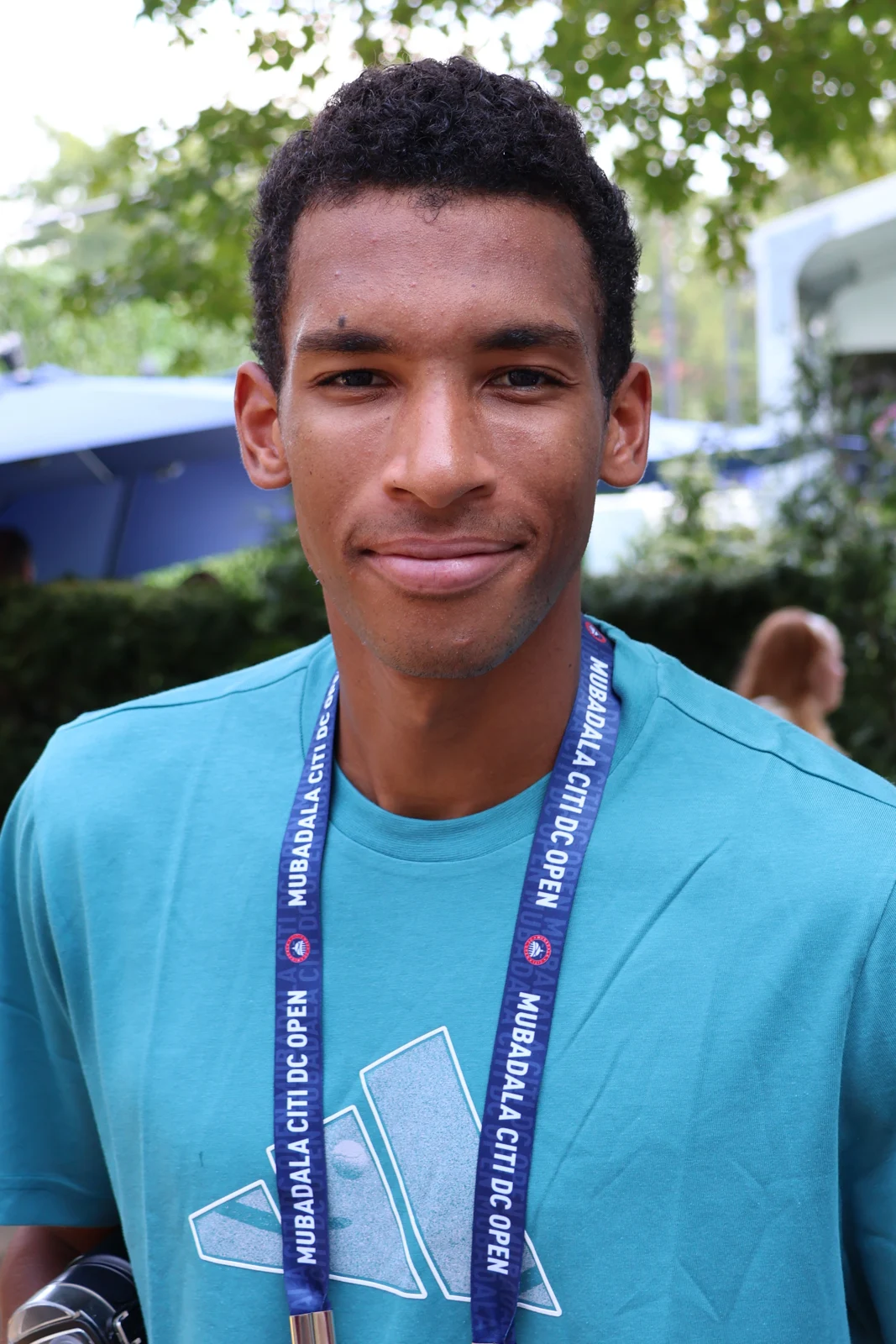
 Félix Auger-Aliassime
- Final tie score
- Canada 3–1 France
- Auger-Aliassime · deciding singles aces
- 17
- Attendance across two days
- 22,340
The deciding singles match turned on first-strike execution
Percent · zero-based scale
The tie began with the result the rankings did not suggest
The performance that changed the shape of the weekend belonged to Draxl. Facing world No. 32 Arthur Rinderknech in his first match against a Top 50 opponent, the Canadian won 6-2, 7-5. The official report records a 78% first-serve rate, 73% of first-serve points won, three breaks converted and all three break points saved. Those figures describe execution under pressure more clearly than the phrase ‘home inspiration’. Draxl did not merely survive while the audience carried him. He protected his serve, punished an uneven opening from Rinderknech and found answers when the Frenchman improved. The crowd forms part of the story; the quality of those answers is the stronger analytical story.
A 2–0 lead did not mean Canada controlled every matchup
Auger-Aliassime then beat Quentin Halys 7-6(5), 4-6, 6-3, giving Canada a commanding scoreline after Friday. Yet the route mattered. Halys allowed only limited return opportunities for long periods and took the second set before two double faults contributed to the decisive break in the third. The Canadian served 12 aces and won 77% of his first-serve points, according to the match report. We read that as a strong service platform combined with a match that remained genuinely competitive. A home tie can feel inevitable once the scoreboard says 2–0; the individual contests show how little inevitability existed inside it.
France’s doubles win is the necessary counterweight
If the crowd itself created a broad Canadian performance advantage, the doubles rubber should have offered confirming evidence. Instead, Benjamin Bonzi and Pierre-Hugues Herbert beat Auger-Aliassime and Davis Cup debutant Duncan Chan 7-6(4), 6-3. The French pair saved Canada’s only first-set break point, ran away with the start of the tie-break and found the match’s only break in the second set. Their experience and execution travelled into a hostile arena. This does not prove that home support had no effect; Chan explicitly said the energy helped Canada through difficult service games. It shows that tactical clarity and partnership quality can override whatever atmospheric benefit exists.
The clearest home effect appeared after something went wrong
The most persuasive case for the crowd is not that it made Canada dominant. It is that it may have supported recovery. After losing the doubles, Auger-Aliassime dropped the first set to Rinderknech and trailed 2-4 in the second-set tie-break. He then recovered to win 4-6, 7-6(4), 6-4. The official report credits him with 17 aces, 80% of first-serve points won and 55% of return points won when Rinderknech missed his first serve. Those numbers identify how the comeback was completed: protected service games and decisive attacks on the second delivery. The crowd may have helped sustain belief, as the player himself reported. The measurable mechanism remained serve and return execution.
The strongest argument against our view
Players experience the match from inside the arena, and both Auger-Aliassime and Chan credited the Quebec City support. Dismissing those statements because they cannot be converted into a clean percentage would be arrogant. Emotion can affect attention, energy and the ability to recover after a poor passage. A record Canadian Davis Cup attendance also made this setting different from an ordinary tour match. The limitation is causal: we cannot observe the same players, on the same court, against the same opponents, without the crowd. The testimony supports the claim that the atmosphere mattered to them. It cannot tell us exactly how many points it changed or whether it affected every Canadian equally.
What the weekend changes in our original opinion
Before the tie, we argued that home advantage should be attached to specific mechanisms: selected conditions, familiar support and the way pressure is handled. The result strengthens the pressure argument more than the domination argument. Canada lost one rubber, needed three sets in both Auger-Aliassime singles matches and faced a near-elimination position in the deciding contest. The team still found three points, including an upset from its nominal No. 2. We would now give the crowd more weight as part of the recovery environment, particularly for Auger-Aliassime in his home city. We would not add an automatic home premium to every Canadian matchup. Bologna will remove the Quebec setting and provide the next useful comparison.
The practical lesson for the next team tie
A serious preview should ask three separate questions. First, did the host choose conditions that suit its available players? Second, does the lineup contain enough matchup quality beyond the leading name? Third, how has the team responded when the occasion becomes uncomfortable? Canada supplied evidence for all three, but in different amounts. The faster court was chosen deliberately, Draxl gave the lineup unexpected depth and Auger-Aliassime recovered twice. France’s doubles win prevented the story from becoming romantic certainty. Our conclusion is deliberately split: the crowd helped make the tie emotionally resilient; the players still had to create every break point, hold every service game and solve every opponent.
Your take
Did Canada’s crowd change the tennis—or help the players recover when the tennis turned against them?
Discuss this story on X →Sources & context
- Tennis Canada — Canada–France Saturday report and deciding singles statistics, 19 September 2026
- Tennis Canada — Friday report: Draxl and Auger-Aliassime give Canada a 2–0 lead, 18 September 2026
- Tennis Canada — Auger-Aliassime reflects on his home Davis Cup debut, 19 September 2026
- CourtValue — our pre-tie opinion on home advantage
Figures are tied to the stated snapshot. Commentary does not replace a match-specific assessment. See our editorial policy and corrections policy.
Explore player profiles · View recorded results · Explore tournaments
Keep reading
Davis Cup home advantage: what Canada vs France can tell us →
Ben Shelton’s return game: has it caught up with his serve? →
Alexander Zverev: what his titles tell us about his next match →