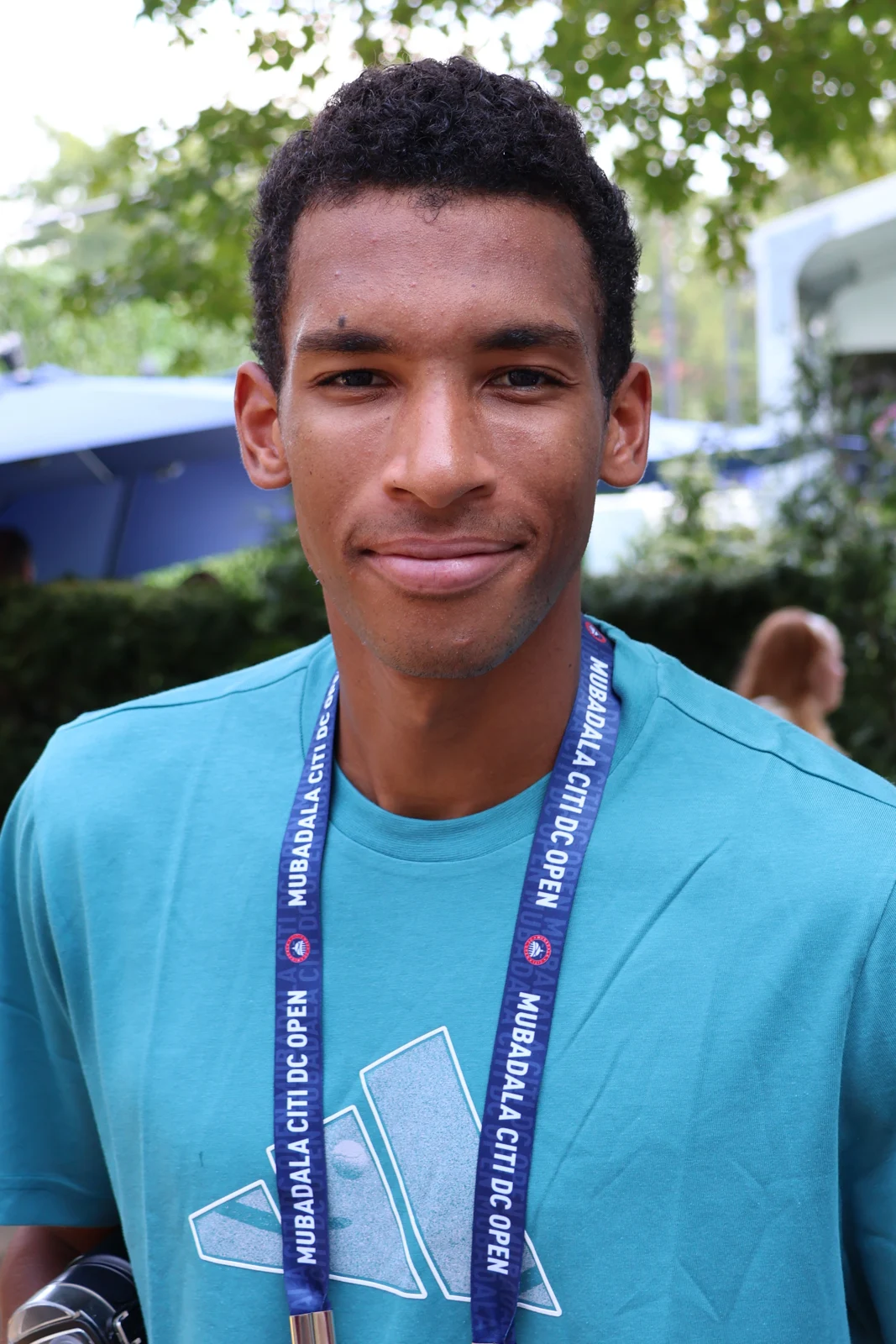
 Félix Auger-Aliassime
- Canada vs France
- 18–19 Sep
- Host city
- Quebec City
- Competition
- Davis Cup
Motivation is real; its size is not supplied
There is a tempting leap from wanting a result badly to being more likely to produce it. The interview itself offers a more interesting interpretation: Auger-Aliassime discusses handling pressure and finding his level when it matters. That leaves room for the crowd to energise a player, but also for the occasion to become a demanding part of the job. Our view is that home support is context to understand, not an extra percentage to invent.
Two wins and a loss at home are not a crowd coefficient
Canada’s three preceding ties were all at home: defeat to Hungary, then victories over Israel and Brazil. That is two wins from three, calculated from Tennis Canada’s account. There is no matching recent away sample here: the previous trip was to the neutral-site Final 8 in Malaga. Treating that as a clean home-versus-away experiment would be misleading. Our reading is that the mixed home results already undermine the strongest version of the narrative: location did not guarantee success. Different opponents and team selections remain part of the explanation.
The draw makes the home advantage argument testable
The September 17 draw names Draxl against Rinderknech and Auger-Aliassime against Halys for Friday. Auger-Aliassime is also nominated alongside debutant Duncan Chan for Saturday’s doubles against Bonzi and Herbert; nominations can change. Our view is that this concentration of responsibility matters more than the homecoming headline. Canada needs its leading singles player to contribute in a second discipline, with a new partner. That is a concrete demand, not evidence of fatigue before anyone has played.
Court speed is a stronger claim than crowd volume
Auger-Aliassime describes the court as quicker than recent tour conditions and believes it suits Canada. That player assessment gives the home advantage argument substance, although it is not an independently measured court-speed figure. He leads Halys 3–0, but needed comebacks in both 2025 meetings. We would therefore resist reading the matchup as straightforward. If Canada protects its service games and makes the new doubles partnership effective, the case for favourable conditions strengthens. If France is equally comfortable, the crowd alone cannot explain an edge.
The roster can outweigh the romance
The same official preview lists Canada without Gabriel Diallo and Alexis Galarneau, and France without Arthur Fils. Those absences change the available singles and doubles combinations. We would give them more analytical weight than the volume of the home crowd. Surface choice can also favour a host, but its benefit depends on both lineups: a court that helps Canada’s serving may help French servers too. No opponent-adjusted home-effect estimate is available in the evidence used here, so our conclusion is deliberately qualitative: home comfort is plausible; a measurable extra advantage has not been established.
Team tennis redistributes pressure rather than removing it
The national setting changes what a result means to players and supporters, but it does not move pressure in only one direction. A home crowd can create energy after a difficult game and make momentum feel larger. It can also amplify the expectation placed on the leading player. Auger-Aliassime’s double-duty nomination makes that balance especially relevant: Canada is asking him to influence the tie in singles and doubles. Our view is that the crowd is best understood as part of the competitive environment. It may help a player respond, but it cannot serve, return or manage recovery on his behalf.
The doubles nomination changes the tie’s internal logic
Doubles is not an interval between singles matches; it can determine which team plays the later rubbers with freedom and which one plays them under immediate consequence. Pairing Auger-Aliassime with Chan gives Canada elite singles quality alongside a Davis Cup debutant, while France can use an established doubles specialist in Herbert. The combinations create tactical questions that a simple ranking comparison cannot answer: return positioning, communication, first-volley quality and how quickly a new pair settles. If Canada wins that contest coherently, the home narrative gains a concrete performance. If the partnership struggles, emotion will not explain away the structural challenge.
What this tie can actually teach us about home advantage
One tie cannot estimate a universal home effect, but it can show which mechanisms are plausible. We can observe whether Canada appears comfortable with the speed it selected, whether the crowd helps after setbacks, and whether the schedule places a visible cost on the leading player. Those are specific observations. They are more useful than crediting every Canadian success to atmosphere or treating every French success as evidence that atmosphere is irrelevant. The honest conclusion will remain conditional: home advantage matters when it changes the tennis being played or the way pressure is handled. The score alone cannot tell us which of those occurred.
Enjoy the occasion without outsourcing the verdict
The strongest counterargument is that team tennis changes a player’s experience in ways a spreadsheet will not capture. We accept that. A useful analysis should allow for what it cannot measure rather than pretend emotion is absent. But uncertainty should make the conclusion more thoughtful, not more absolute. Canada’s September 18–19 tie with France gives fans a compelling home story. Our opinion is to celebrate that story while building any match assessment from the contest itself. The player still has to serve, return and solve the opponent in front of him.
Your take
Does a home crowd help most when a player is ahead—or when the match becomes uncomfortable?
Discuss this story on X →Sources & context
- Tennis Canada — Félix Auger-Aliassime Comes Home for Davis Cup, 15 September 2026
- Tennis Canada — draw and player assessment of conditions, 17 September 2026
- Tennis Canada — Quebec City qualifying tie preview
Figures are tied to the stated snapshot. Commentary does not replace a match-specific assessment. See our editorial policy and corrections policy.
Explore player profiles · View recorded results · Explore tournaments
Keep reading
Canada beat France at home. The crowd helped—but it did not win the tie. →
Alex Barrena vs Samuele Pieri: why recent wins leave questions →
Daniel Vallejo has earned the seed. Hangzhou will show what kind of rise this really is. →